
Galaxsys crash review

Tower Rush

Editorial rating: 4/5 · quick rounds, clear cash-out decisions and random bonus events

ProviderGalaxsys
RTP96.12%-97.00%
VolatilityHigh
Max Win100x / $10,000
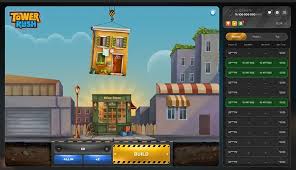
Tower Rush game interface
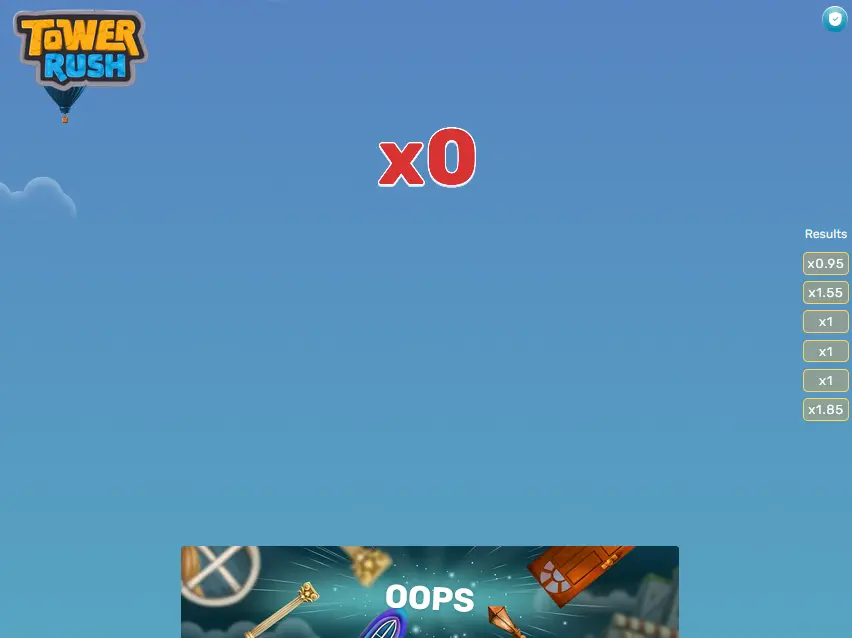
Tower Rush game over

What Is Tower Rush

Tower Rush is a Galaxsys crash game where a tower is built floor by floor. Each successful floor increases the multiplier, but the money is not secure until the player cashes out.

The round is built around small decisions rather than a single waiting moment. After every successful placement, the player chooses whether the current payout is enough or whether the next floor is worth the risk.

That makes the game feel more hands-on than a traditional crash graph. Aviator and similar games ask players to watch a curve; Tower Rush asks them to make a fresh build-or-cash-out decision after each safe floor.

The trade-off is the payout ceiling. Tower Rush is capped at 100x or $10,000, so it is less about chasing huge multipliers and more about short sessions, bonus events and disciplined exits.

How Tower Rush Works

Stake -> Build -> multiplier grows -> cash out or build again

Tower Rush cashout screen
  1. Set your stake. Bet limits typically range from $0.01 to $100, depending on the casino and configuration.
  2. Press the yellow Build button to place the first floor and start the active round.
  3. A successful floor raises the multiplier and updates the potential payout immediately.
  4. After every safe floor, choose Cash Out to secure the payout or Build again.
  5. If the next floor fails, the tower collapses and the round ends immediately.
  6. Unless a bonus has protected value, uncashed winnings are lost with the failed round.

Every round ends with either a successful cash out or a collapse.

Gameplay Modifiers

Tower Rush uses three random modifiers to break up the basic build-and-cash-out loop. Frozen Floor, Temple Floor and Triple Build can protect value, add a wheel reward or speed up the multiplier.

Frozen Floor permanently secures the winnings accumulated up to the moment it appears. Once activated, that portion of the payout can no longer be lost, even if the tower collapses later in the round.
🎡
Temple Floor launches a bonus wheel containing several multiplier rewards and one special Frozen Floor segment. Rewards are added on top of the current round and can change its value within seconds.
×3
Triple Build advances the tower by three consecutive floors instead of one, applying an individual multiplier to each successful placement and creating faster multiplier growth.
Together, these mechanics make the round less predictable while keeping the rules easy to follow. They are the main reason Tower Rush feels more active than a standard multiplier graph.
Protected payout

Frozen Floor can protect part of the payout while the player continues building with the rest at risk.

Faster exposure

Triple Build and Temple Floor can raise the payout quickly, but the round remains random and volatile.

Tower Rush Compared with Crash Games

Tower Rush has a lower ceiling than many crash competitors, but it gives the player more repeated decision points inside each round.

Tower X focuses on much higher payout potential, while Tower Rush focuses on short rounds and bonus-driven decisions.
Aviator uses a single continuous multiplier curve. Tower Rush replaces that passive watching pattern with discrete build decisions after each successful floor.
JetX and Spaceman can advertise much larger maximum payouts, but their core loop is closer to standard crash gameplay with fewer mid-round modifiers.
Tower Rush is best suited to players who want quick sessions and visible risk control rather than exceptionally high payout ceilings.
Tower Rush game view

Who Tower Rush Is For

Tower Rush is best suited to players who enjoy short sessions, quick rounds and clear cash-out choices.

It works especially well for users who enjoy fast decision-based gameplay and want more interaction than a standard multiplier graph.

Players searching for extremely high multipliers, Autoplay or a stronger skill component may prefer other crash games.

The game is primarily based on chance. Cash-out decisions influence volatility and bankroll exposure, but they do not alter the underlying RTP.

Editorial Rating 4/5

Tower Rush gives the crash format a more active rhythm by adding floor-by-floor decisions and random bonus events.

Best for: fast sessions, modern crash-game fans, Provably Fair verification and casual play.

Less suitable for: extremely high multipliers, automated play, or skill-heavy decision systems.

The 100x cap is modest, but the game compensates with a readable flow, Provably Fair support and frequent decisions.

Play Tower Rush
Tower Rush

Tower Rush: What Matters Before You Play

Tower Rush is a compact Galaxsys crash game where the round is built one floor at a time. The appeal is simple: every successful floor raises the payout, but every extra click also leaves more money exposed until you cash out.

ParameterDetails
DeveloperGalaxsys
Release Year2024
GenreCrash / Tower Building
RTP96.12%-97.00%
VolatilityHigh
Maximum Win100x stake or $10,000
Betting Range$0.01-$100
Demo VersionAvailable
Mobile SupportYes (HTML5)
Provably FairSupported

Best For

  • Players who like short rounds with a clear cash-out decision.
  • Crash-game fans who want more interaction than a passive multiplier curve.
  • Users who value demo play and Provably Fair verification.
  • Small-bankroll players who need low minimum bets.

Less Suitable For

  • Players chasing extreme 1,000x+ multipliers.
  • Anyone who relies on Autoplay or automatic cash-out tools.
  • Users looking for a skill game rather than a chance-based crash title.

Editorial Verdict

Tower Rush works because it keeps the rules easy while making every step feel active. You are not waiting for a line to climb on a chart; you are deciding whether the next floor is worth the risk.

The 100x cap is not spectacular next to some crash competitors, but the game is more readable, faster to learn and stronger for short mobile sessions. Our rating: 4/5.

Play Tower Rush

How a Tower Rush Round Plays Out

Set the stake. A round starts with the wager. Operators commonly set the range around $0.01-$100, although limits can vary by market and currency.

Press Build. The first floor is placed and the round becomes active. A successful placement raises the multiplier and updates the possible payout immediately.

Decide after each floor. This is the core loop. You can take the current payout or build again. The next floor can improve the result, trigger a bonus or end the round.

Understand what is at risk. Unless Frozen Floor has protected part of the payout, winnings that remain in the round are not yours yet. They only become final after a successful cash out.

End the round deliberately. Tower Rush does not reward patience by itself. The correct exit point is the one that fits your stake size, bankroll and risk limit.

Bonus Features

The bonus system is what keeps Tower Rush from feeling like a basic crash clone. Bonus events are random, but each one changes the round in a different way: one protects value, one adds a wheel reward, and one speeds up progression.

None of these features can be forced by a betting pattern. Treat them as volatility modifiers, not as tools that can be predicted.

Frozen Floor

Frozen Floor locks a portion of the current winnings. If the tower falls later, the protected amount remains safe while any additional unprotected winnings are still at risk.

This is the most defensive feature in the game because it can turn a risky round into one where at least part of the value is already secured.

Useful Because

  • Protects value without forcing an immediate cash out.
  • Can make continued building less punishing.
  • Creates a clear moment to reassess the round.

Keep In Mind

  • It appears randomly.
  • It does not make future floors safer.
  • It does not remove the risk from new winnings.

Temple Floor

Temple Floor opens a bonus wheel with extra multiplier rewards and a Frozen Floor segment. The result is applied to the round and can quickly change the payout profile.

Temple Floor is the most swingy feature: it can make a mediocre round more interesting, but the player does not control the wheel outcome.

Useful Because

  • Adds extra value without a separate bet.
  • Can appear more than once depending on the round.
  • May create a better cash-out opportunity.

Keep In Mind

  • The wheel is random.
  • A bonus does not guarantee a profitable exit.
  • Higher payout potential still comes with crash risk.

Triple Build

Triple Build advances three floors in one event. This can push the multiplier upward faster than normal building and make the round feel much more aggressive.

It is exciting, but it should not be treated as a skill advantage. The feature accelerates the round; it does not change the underlying randomness.

Useful Because

  • Speeds up multiplier growth.
  • Can combine well with other bonus events.
  • Creates fast, memorable rounds.

Keep In Mind

  • Fast growth also means faster exposure.
  • It does not improve the odds of the next outcome.
  • A larger multiplier still needs a successful cash out.

RTP, Volatility and Fairness

RTP and Game Mathematics

Tower Rush is usually published with RTP configurations between 96.12% and 97.00%. RTP is a long-term theoretical figure, not a session forecast and not a promise that a short run will return that percentage.

Every placement is resolved independently. A clean sequence of successful floors does not make the next floor safer, and a losing streak does not make the next round due to win.

The RTP range exists because operators can use different certified setups. The basic round structure stays recognizable, but the exact return profile can vary by version.

Common Misconceptions

  • Cash-out timing changes volatility, not RTP.
  • Doubling after losses does not improve the next outcome.
  • Bonus features are random and cannot be scheduled.
  • A demo streak should not be read as a real-money signal.

The practical goal is not to beat the math. It is to choose stake sizes and exit points that keep losses within a budget you already accepted.

MultiplierFrequency
Around 2xCommon
Around 5xOccasional
Around 20xUncommon
Above 50xRare

These examples are illustrative rather than guaranteed outcomes, as every round is generated independently.

Provably Fair Explained

Provably Fair lets a player check that a completed round was not changed after the bet. The operator commits to a hidden server seed hash before the round, then reveals the seed afterward.

To verify a round, copy the revealed values, generate the hash with a public SHA-256 tool and compare it with the pre-round hash. Matching values confirm that the server seed was committed before the outcome was known.

  1. Open the Provably Fair panel.
  2. Copy the server seed, client seed and hash values.
  3. Generate the hash independently.
  4. Compare it with the value shown before the round.

Demo, Mobile and Interface

FeatureDemo ModeReal Money
CurrencyVirtual CreditsReal Balance
RTPSame mechanicsSame mechanics
Bonus FeaturesAvailableAvailable
Provably FairAvailable where supportedAvailable where supported
WithdrawalsNoYes

The demo is the best first stop because it lets you learn the Build and Cash Out rhythm without risking money. It is useful for understanding the bonus features, but it should not be used to predict real-money results.

The mobile version is straightforward. The main controls are large, the round flow is quick, and the game does not depend on split-second reaction to a moving graph. That makes it easier to play on a phone than many traditional crash titles.

The interface focuses on stake size, active multiplier, potential payout, recent rounds, the Build button, the Cash Out button and the Provably Fair panel. There is not much clutter, which suits the short-session format.

Strategy Guide

Low-Risk Approach

Use small stakes, cash out early and treat bonuses as a reason to reassess, not as a reason to chase. This approach lowers variance but also limits upside.

Flexible Approach

Secure ordinary rounds early, but consider continuing after Frozen Floor or a strong Temple Floor result. The key is to raise risk only when the round already has protected or added value.

High-Risk Approach

Chasing deeper towers can produce better multipliers, but most attempts will fail before the target. This style requires a smaller stake size and a hard stop-loss.

Why Martingale Still Fails

Increasing the next stake after a loss does not make the next floor safer. Tower Rush rounds are independent, and a betting progression only makes the next loss more expensive.

A better rule is simple: decide the maximum amount you are willing to lose before the session starts, then stop when that limit is reached.

Common Mistakes

  • Building again only because the last few floors landed.
  • Increasing stake size after losses.
  • Ignoring the value protected by Frozen Floor.
  • Playing real money before testing the interface in demo.
  • Treating RTP as a short-term guarantee.

Tower Rush Compared with Other Crash Games

GameCore IdeaMax WinMain Strength
Tower RushBuild floors and cash out100xBonus-driven decisions
Tower XTower crash with higher ceilingUp to 5,000xLarger payout potential
AviatorClassic rising multiplierOperator-dependentSimple and familiar
JetXArcade-style crash flightVery high ceilingBig multiplier chase
SpacemanTraditional crash roundUsually highRecognizable format

Exact limits and RTP can vary by operator and market.

Tower Rush is not the best pick if the only goal is the largest possible multiplier. Its advantage is the number of meaningful moments inside a short round: Build, cash out, react to a bonus, reassess risk.

Advantages

  • Easy to understand after one demo round.
  • More interaction than a passive crash graph.
  • Three bonus features with clear roles.
  • Low minimum stakes on many operators.
  • Mobile-friendly HTML5 layout.
  • Provably Fair support where offered.

Limitations

  • 100x cap is modest for the crash category.
  • No built-in Autoplay focus.
  • High volatility remains part of the game.
  • Strategy cannot change the random outcome.

Final Verdict

Tower Rush is strongest when treated as a fast, controlled crash game rather than a jackpot hunt. The bonus features give the round enough variation to stay interesting, while the floor-by-floor structure makes the risk easy to understand.

The game is not low-risk, and it is not built for players who need huge multiplier ceilings. But for short sessions, demo practice, mobile play and clear cash-out decisions, Tower Rush is one of the more approachable modern crash games.

Start Playing

FAQ

Tower Rush — common questions

  • Tower Rush is a Galaxsys crash game built around a tower-building round. You place floors one after another, the multiplier grows after successful placements, and the main decision is when to cash out before the tower falls.

  • Yes. If the operator offers Tower Rush in real-money mode, a successful cash out pays from the real balance. If the tower collapses before cash out, the stake and all unfrozen winnings from that round are lost.

  • Published Tower Rush configurations usually sit in the 96.12%-97.00% RTP range. The exact value can depend on the operator setup, so the game information panel is the best place to confirm the version you are playing.

  • After a successful floor, you can take the current payout or press Build again. Cashing out ends the round with the displayed reward; building again increases the possible payout but also keeps the active amount at risk.

  • Frozen Floor protects part of the winnings, Temple Floor adds a bonus wheel with extra rewards, and Triple Build moves the tower forward by three floors. These features are random, but they can change the value and risk of a round quickly.

  • No. Tower Rush is chance-based. Timing your cash out changes volatility and bankroll exposure, but it does not change the probability of the next floor or the theoretical RTP.

  • There is no strategy that guarantees profit. A safer approach means smaller stakes, earlier cash outs and strict limits. This can reduce swings, but it cannot remove the house edge or the chance of a losing streak.

  • Yes. Tower Rush supports Provably Fair verification on supported operators. After the round, the revealed seed can be checked against the pre-round hash to confirm that the result was not changed after the bet.

  • Yes. The HTML5 interface works in modern mobile browsers, with large Build and Cash Out controls and the same core mechanics as desktop play.

  • Players looking for guaranteed returns, low-risk casino games or very high maximum multipliers may not enjoy Tower Rush. It is a high-volatility crash game, so it should be played with a fixed budget.

Ready to try Tower Rush?

Try the demo first, then play with real funds only after setting a clear budget

Tower Rush full game view
Play Tower Rush